John Donovan Named Chief Operating Officer for Fuel Management System Vendor Fueltrax
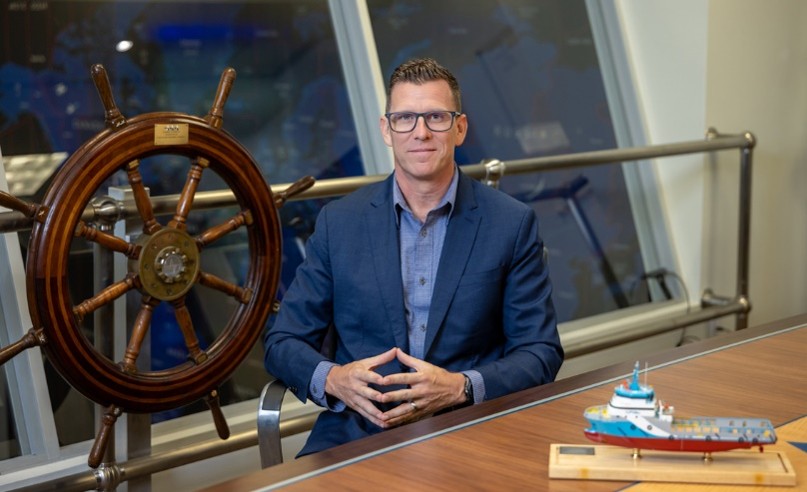
HOUSTON, July 28, 2026 – John Donovan, a maritime operations veteran, has been named Chief Operating Officer for Fueltrax as the company focuses on leveraging its vast amounts of shipping vessel data to enhance clients’ fleet performance.
Donovan has been with Fueltrax since 2018, joining the company as Director of Global Operations, with subsequent promotions to Vice President roles. He has led the company’s extensive buildout of global infrastructure to support the industry-leading Fueltrax fuel management systems. Under his leadership, Fueltrax sales have soared and the company has established deep relationships with many major international energy industry companies.
Before joining Fueltrax, Donovan spent 16 years as a professional mariner and in maritime operations roles at sea and ashore. He is also a U.S. Navy veteran.
In his new role, Donovan is focused on taking advantage of the continuing evolution of fuel management systems.
“For years, the primary emphasis for these systems was accurate fuel measurement and accountability,” Donovan said. “Today, those systems support a broader operational picture that includes vessel performance, emissions reporting, fuel security, maintenance planning, and decision support.”
Donovan is also leading Fueltrax’s drive to bring commercial, engineering, manufacturing, deployment and customer-support functions into a fully integrated operating structure to deliver better execution for customers – from initial vessel assessment through installation and long-term support.
Fueltrax understands that maritime technology providers must operate more like maritime companies and less like software vendors. “A system should be judged not only by what it can demonstrate, but by whether it can be installed efficiently, supported globally, and trusted aboard the vessel year after year,” Donovan said.
“Digitization, automation, and AI are increasing the value of precise, auditable source data,” Donovan emphasized. “Analytics are only as reliable as the instrumentation feeding them, which makes measurement accuracy, data provenance, and system integrity increasingly important.”
This is especially true as fuel security becomes a more prominent issue amid elevated diesel costs, tighter operating margins, and increasingly complex fuel supply chains.
That is where Fueltrax stands out, Donovan noted. The company has mastered the difficult task of deploying instrumentation reliably aboard working vessels, even in remote and challenging parts of the world. The engineering, installation discipline, logistics, commissioning, training, and long-term support necessary for successful maritime technology are now ingrained in the Fueltrax DNA, he added.
About Fueltrax
Fueltrax® is the leading smart fuel management system compatible with any vessel, engine, or fuel in any location in the world. It reduces onboard fuel consumption costs and emissions and sets the standard for secure, compliant, and optimized vessel performance. Each Fueltrax installation includes access to the cloud-based data analytics service, FUELNET™. Fueltrax delivers over 99% system uptime globally and is the only EFMS accepted universally by all major oil companies. For further information, contact info@fueltrax.com.
Fueltrax Marks 135th Electronic Fuel Management System Installations on Saudi Aramco Vessels
A new Fueltrax installation highlights the long-term reliability, trust, and ongoing support Fueltrax continues to deliver across offshore vessel operations.
This month, Fueltrax announced its 135th Electronic Fuel Management System (EFMS) installation on a Saudi Aramco vessel. This milestone reflects Fueltrax’s continued role in supporting offshore fuel monitoring, marine fuel management, and vessel performance programs connected to Saudi Aramco operations.
At the center of each Fueltrax installation is the Fueltrax Electronic Fuel Management System, a marine fuel monitoring solution designed to help vessel owners, operators, and charterers measure, manage, and report fuel use with confidence. Fueltrax uses high-quality Coriolis mass flow meter technology, secure data transfer, and 24/7 operational support to monitor fuel consumption, fuel density, vessel activity, and overall fleet performance. The system also supports reliable data collection for emissions tracking, ESG reporting, and long-term operational decision-making.
Over the past 5 years, Fueltrax has installed and maintained Electronic Fuel Management Systems for vessels operating within Saudi Aramco-related offshore programs. Like many offshore charterers, Saudi Aramco works within an approved vendor framework that includes more than one approved EFMS provider. Saudi Aramco does not publicly identify a preferred EFMS vendor or appear to sole-source from a single EFMS provider. Within that framework, Fueltrax continues to be selected for new vessel installations.
In offshore energy, technical approval and fleet adoption are not the same thing. An approved EFMS provider may be eligible for use, but repeated vessel installations show a deeper level of operational confidence. For vessel owners and charterers, the most meaningful signal is often not a single announcement or pilot project, but the installed base that continues to perform over time.
Fueltrax is known for high-quality EFMS installations, reliable system performance, and long-term customer support. That reputation is reflected not only in the number of Fueltrax systems installed, but also in the continued operation of previously installed systems and the company’s ongoing work across Saudi Aramco vessel programs.
Fueltrax has supported Saudi Aramco-related vessel operations for the past 5 years. During that time, Fueltrax systems have continued to support fuel consumption monitoring, vessel reporting, emissions visibility, and offshore operational transparency. The continued installation of Fueltrax EFMS technology demonstrates the importance of system longevity, responsive service, durable materials, accurate measurement, and trust between vessel operators, charterers, and technology providers.
Offshore EFMS performance also depends on support after installation. Vessel schedules, installation windows, crew training, and operational questions require a provider that can respond quickly and understand the realities of the local offshore market. Fueltrax’s continued work across Saudi Aramco-related vessel operations reflects both technology performance and the support structure required to sustain long-term fuel accountability.
The Fueltrax team remains focused on active support, high-quality equipment, and long-term relationships with customers and partners. For offshore vessel operators, an EFMS is not only a compliance or monitoring tool. It is a long-term operational system that must continue to perform in demanding marine environments.
Looking for an EFMS System?
For offshore operators, selecting an Electronic Fuel Management System requires more than comparing upfront cost or confirming technical approval. Long-term reliability, service continuity, installation history, data accuracy, and support responsiveness all play an important role in sustained vessel performance.
Many EFMS providers may work within the same approved vendor environments. The stronger question is not only whether a charterer has previously worked with an EFMS provider. Operators should also ask:
How long do the provider’s systems remain operational?
How many successful vessel installations does the provider have?
Is the provider continually selected for new installations?
Does the provider offer responsive support after installation?
Does the system continue to deliver accurate fuel monitoring, vessel performance data, and emissions reporting over time?
When evaluating an EFMS provider for any charter, offshore operators should consider both longevity and consistency. The history and trajectory of the provider matter. Looking only at current cost, technical approval, or a single installation does not always provide a complete view of long-term value, reliability, or operational fit.
Fueltrax’s continued installations on Saudi Aramco vessels demonstrate the value of proven EFMS performance, trusted support, accurate marine fuel monitoring, and long-term vessel performance experience.
More than 90% of deep sea and offshore support vessel operators working with a global oil company in Southeast Asia chose Fueltrax.
Of 30 ships that implemented a fuel management system at the urging of their oil company customer, 28 chose Fueltrax EFMS after evaluating its efficiency and cost.
Fueltrax EFMS is the industry’s leading and only patented fuel management solution. It measures direct fuel consumption and transfers on board, enabling vessel operators to reduce operational and fuel costs. It achieves unparalleled accuracy and stability by taking direct measurements using Coriolis smart meters to measure mass flow rather than volume. The system consistently measures fuel quality and transmits that data to the Fueltrax operations center for real-time monitoring.
Including the 28 new vessels implementing the EFMS, there are now 38 vessels using Fueltrax in the oil company’s fleet. This most recent achievement has further solidified Fueltrax as the market leader in fuel management systems, allowing vessel operators and their oil company partners to operate more efficiently, increase the sustainability of their operations, and minimize the risk of fuel theft.
Fakhrurrazi Mat Hassan, COO of vessel operator Tegas Navigation, noted how impressed he was with Fueltrax as a leading provider of vessel fuel monitoring systems. The EFMS, he said, “provides us with accurate real-time data on fuel consumption, which allows us to make informed decisions. With a user-friendly interface and ease of use, it is a valuable tool to generate detailed reports and analyze trends. It has helped us optimize our fuel efficiency and reduce operational costs.”
Nur Syahida Che Zam, General Manager of Dinastia Jati, agreed. “Fueltrax has set a high standard in the industry for reliability, accuracy, and robust performance. With a track record that is consistent and dependable, Fueltrax ensures that the data it provides is holistic in all aspects of fuel management. Its precision in measuring fuel usage guarantees access to highly accurate consumption data, enabling us to make informed decisions and optimize our operations.”
In addition, Wong Ha Kiang, General Manager of MK Bumimas, praised the Fueltrax technology and its ability to optimize fuel efficiency. At the same time, Ker Boon Chong, Head of Marine Services at Asian Supply Base, said he was impressed by the system and the “friendly and supportive technical support team.”
“It is all about cost savings and fuel efficiency, and Fueltrax has the best and most dependable features to guarantee that.Our system’s hardware reliability, durability, and accuracy were the keys to these vessel operators’ choices. They also recognized our superior support in this region and our cost transparency, so they never have to worry about hidden fees.”– Faiz Azani, Fueltrax Director of Operations for Southeast Asia.
The first Vessel Operations Center outside our U.S. headquarters is now open, providing closer-to-region coverage for Asia-Pacific customers.
Following the award of a recent major contract in Southeast Asia, where offshore charter operators sought fuel management solutions that offered precise fuel consumption measurement, data clarity, and emissions monitoring, Fueltrax is delighted to provide new specialist in-region support.
Ruben DeLeon Fueltrax Vice President of Product Support, drove the establishment of the Kuala Lumpur facility based on his seven-year tenure at NASA’s Mission Control Center.
As DeLeon explains, the new Fueltrax facility is inspired by the NASA center, “a place where data was continuously monitored, problems identified, and solutions crafted through the collective efforts of experts across various disciplines. Its environment and design were pivotal in achieving flawless missions.”
Both Fueltrax operation centers enable support staff from diverse backgrounds to convene in a single space, offering a comprehensive operational perspective and insight into the health and status of all Fueltrax systems.
The setup fosters teamwork and facilitates swift problem-solving with insights quickly shared by the team to enhance the customer experience. Mohamad Ariff Bin Ramli has joined Fueltrax to manage the new operations center. He has 15 years of on-vessel experience and most recently worked with MISC Maritime Services as a roving marine marshall focusing on fuel optimization and vessel performance. The operations team includes other seasoned professional mariners, chief engineers, skilled instrumentation and control field technicians, and military veterans.
“Each day, the Fueltrax team provides training and support to variousstakeholders, including global technicians, installation partners, vessel crews, shoreside operations, and management teams, and charterer personnel. This new vessel operations center ensures that vessels worldwide can maintain access to top-tier support from highly skilled professional mariners.” – Faiz Azani, Fueltrax Director of Operations for Southeast Asia.
Offshore Fuel Management Installation and Support in Malaysia
Why deployment reliability in Malaysia depends on compliance discipline, emissions monitoring, ESG reporting, fleet optimization, and long-term support.
Malaysia is a mature offshore operating environment with established energy infrastructure, active offshore production, and high expectations for safety, reporting, and operational discipline.
Successful fuel management deployments require more than technical installation. They require coordination with vessel operators, customer teams, local service providers, port or yard facilities, and regional support networks.
Malaysia also places growing importance on emissions visibility and ESG reporting. For offshore operators, that makes measured fuel data more valuable after installation, not just during commissioning.
In Malaysia, deployment reliability depends on whether the system can be installed correctly, supported consistently, and used to improve fuel visibility, emissions monitoring, ESG reporting, and fleet optimization over time.
Key Findings
Malaysia offshore deployments require strong planning around access, documentation, scheduling, and customer procedures.
Mature offshore markets place high expectations on system reliability, reporting quality, and support continuity.
Emissions monitoring depends on accurate fuel data that remains available after installation.
ESG reporting becomes stronger when fuel activity is measured consistently across vessels and reporting periods.
Fleet optimization requires comparable data across vessels, operating areas, and contract requirements.
Deployment reliability determines whether fuel visibility continues creating value after the vessel returns offshore.
Operational Problem
Offshore technology projects in Malaysia can face practical challenges around timing, access, coordination, and reporting readiness.
Equipment may need to move through import, port, yard, customer, and vessel access processes before installation can begin. Technicians may need to align with local teams, vessel schedules, safety procedures, and commissioning requirements.
If installation planning is incomplete, the project can lose valuable vessel time.
That creates risk for commissioning, training, diagnostics, and long-term data quality.
The challenge is not only installing the system.
It is making sure the system is ready to support operational reporting, emissions monitoring, ESG data needs, and fleet-level review once the vessel is back in service.
Why It Matters in Malaysia
Malaysia’s offshore sector operates in a mature and highly coordinated energy environment.
Operators are expected to manage vessel performance, fuel visibility, safety, reporting, and customer requirements with discipline. Fuel management systems must support that environment without creating delays or support gaps.
Emissions monitoring adds another requirement.
Fuel data may support carbon tracking, customer reporting, sustainability programs, and operational review. If the system is not installed correctly or maintained consistently, that reporting foundation can weaken.
ESG reporting creates a similar need for data continuity.
The value of the system depends on whether measured fuel activity remains available across vessels, reporting periods, and fleet reviews.
In Malaysia, deployment reliability supports both operational performance and reporting confidence.
Malaysia-Specific Installation and Support Challenges
Malaysia offshore deployments can involve several practical challenges:
import documentation and equipment movement
coordination with port, yard, vessel, and customer teams
safety and access requirements for vessel work
scheduling around active offshore operations
local supplier and technician coordination
support coverage across different operating regions
emissions monitoring requirements tied to fuel data quality
ESG reporting expectations from customers and stakeholders
fleet-level data consistency across multiple vessels
These challenges do not prevent successful deployment.
They make preparation important.
A reliable deployment plan should account for documentation, logistics, installation, commissioning, training, diagnostics, spare parts, and reporting continuity before the vessel is ready.
Emissions Monitoring, ESG Reporting, and Fleet Optimization
Malaysia operations require fuel data that can support both day-to-day decisions and long-term reporting.
Emissions monitoring depends on accurate fuel measurement. Operators need confidence that fuel consumption data can support carbon review, sustainability discussions, and customer reporting.
ESG reporting depends on consistency.
A single vessel report may help explain one operating period, but fleet-level reporting requires comparable data across assets and time. If each vessel reports differently, the data becomes harder to use.
Fleet optimization depends on the same foundation.
When fuel data is measured consistently, operators can compare vessels, identify recurring patterns, review performance trends, and prioritize improvements across the fleet.
For Malaysia operations, these capabilities are most valuable when the system remains supported after installation.
Operational Takeaways
Malaysia offshore support requires a deployment model built around reliability, reporting discipline, and long-term service continuity.
Operators should evaluate whether a fuel management provider can support installation planning, commissioning, diagnostics, maintenance, emissions monitoring, ESG reporting, fleet optimization, and regional service needs.
The system matters.
But the support model determines whether the data remains useful after installation.
For offshore fuel management in Malaysia, deployment reliability helps protect vessel schedules, strengthen reporting confidence, improve fleet visibility, and support emissions and ESG requirements over time.
Fueltrax Note
Fueltrax supports offshore fuel management deployments in Malaysia through installation planning, measured fuel visibility, emissions monitoring support, ESG reporting support, fleet optimization tools, remote diagnostics, and long-term system maintenance.
For emissions monitoring and ESG reporting, Fueltrax helps operators work from measured fuel activity rather than estimates alone. That gives teams a stronger foundation for carbon review, sustainability reporting, customer discussions, and internal performance analysis.
For fleet optimization, Fueltrax helps operators compare fuel activity across vessels, identify recurring patterns, and support better decisions across multiple assets. Through its Active Management approach, Fueltrax also provides continuous monitoring, alerts, and expert oversight that help operators respond to issues in real time, maintain data accuracy, and ensure that fuel insights are consistently applied to improve fleet performance.
In Malaysia, where offshore operators must balance operational performance with reporting expectations, Fueltrax helps keep fuel management systems installed, supported, and useful throughout the operating lifecycle.
Contact the Fueltrax team at info@fueltrax.com to learn how Fueltrax supports offshore fuel management installation, emissions monitoring, ESG reporting, fleet optimization, diagnostics, maintenance, and regional support for Malaysia operations.
Fueltrax is proud to partner with Integrated Marine Solutions (IMS) to help service our clients and grow our presence in the MENA region.
By creating a centralized service hub in the Northeastern part of Saudi Arabia supported by a full spectrum of offshore vessel requirements, IMS aims to be the main gateway to support the marine industry. Their reputation for exceeding client expectations regarding quality of work, safety, and quick action makes them the perfect partner for Fueltrax in the region.
Faisal Alzahrani of IMS has taken on the role of Managing Director and Share Holder of Fueltrax Saudi Arabia to ensure real-time support for all current and future clients in the area. Faisal has completed more than 26 assignments within marine operations in 28 years of service with Aramco.
Faisal excelled at Saudi Aramco Marine Operations, exceeding company expectations in numerous positions. Most recently, he was a Section Head for Logistics and Port Operations Services, managing the most demanding seaport in the region. Faisal’s other Saudi Aramco positions include Marine Adviser, Head of Marine Offshore Field Services & Vessel Operations, Leading Marine Diving Operations, Leading Aramco Training Academy, and Marine Vessel Operation Supervisor. Faisal also served as a Maritime Captain at Saudi Aramco Offshore Operations, ensuring crew safety, ship condition, ship navigation, and communications controls.
“I’m proud to partner with Fueltrax – the world-leading and most innovative fuel management provider. Vessel owners and charterers in the region will soon realize the merits of Fueltrax onboard their fleets. The Fueltrax system offers intelligent and accurate fuel management and provides a bundle of other services to provide clients with real-time insights and smart management of their fleet performance.
“Eventually, Fueltrax will improve fleet efficiency, cut operating costs, and help customers remain competitive. I can confidently say this partnership with Fueltrax is a crucial stepping stone towards greener energy in the kingdom. It aligns perfectly with Saudi Arabia’s ambitious pledge to cut carbon emissions to net-zero by 2060.” – Faisal Alzahrani, Managing Director Fueltrax Saudi Arabia.
Comments closed
Get in touch
From the Gulf Coast to the Middle East, and from South East Asia to Africa, Fueltrax secures sustainable performance for more than 800 vessel owners, charterers, and operators across the world.
Talk to us to discover how to join them.
Get in touch
From the Gulf Coast to the Middle East, and from South East Asia to Africa, Fueltrax secures sustainable performance for more than 800 vessel owners, charterers, and operators across the world.
Talk to us to discover how to join them.
Corporate Office:
+1 (281) 209-3480
Social Media:
READY TO SECURE SUSTAINABLE FLEET PERFORMANCE? CONTACT US